
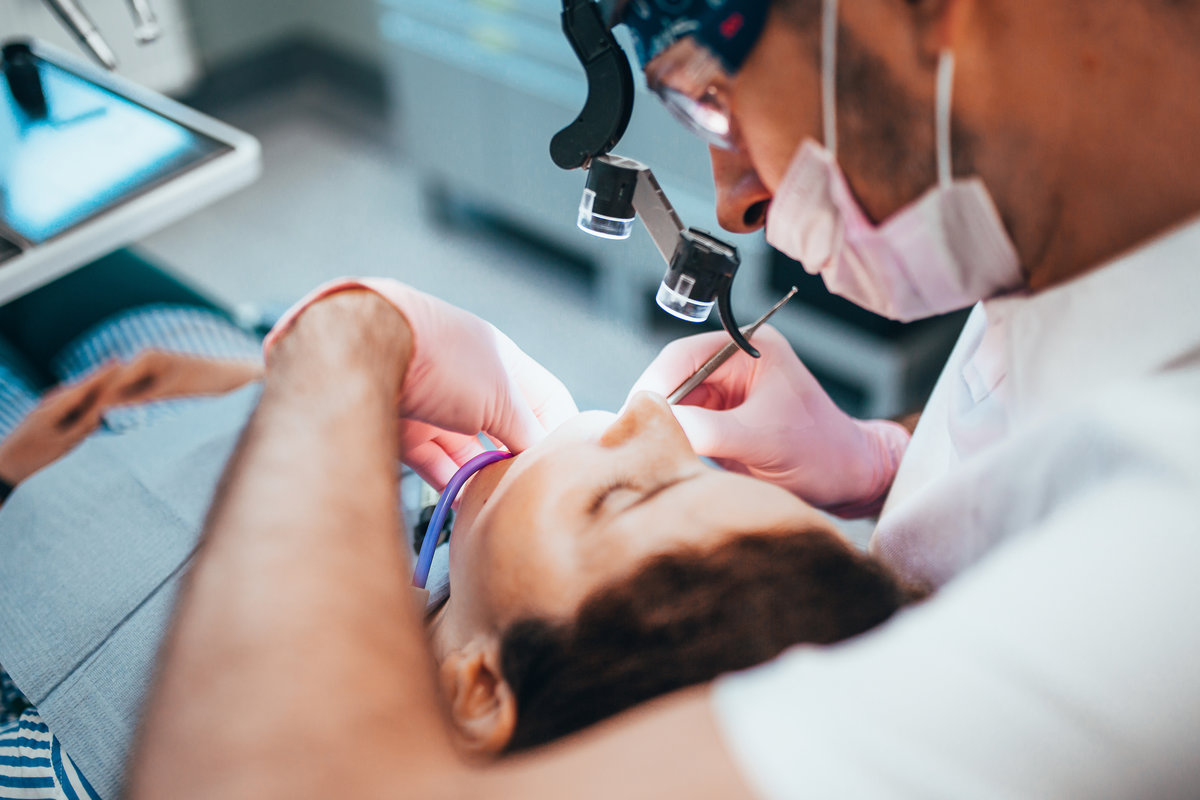
When you need root canal therapy, you face an important decision: should you see your general dentist or visit an endodontist? Both are qualified dental professionals, but endodontists bring specialized training and advanced technology that can meaningfully improve comfort and treatment outcomes for more complex cases.
At Burien Endodontics, Dr. Matthew Tomala and our team combine gentle care with cutting-edge technology to deliver focused endodontic treatment. We use CBCT scanning, Global A-Series 6 Step dental microscopes, digital radiography, and laser treatment to support the most advanced care available in the area. Our commitment to patient comfort and successful outcomes has made us a trusted choice for patients throughout the Seattle area who need endodontic care.
Understanding the Difference Between a General Dentist and an Endodontist
Every licensed dentist receives some training in root canal procedures during dental school, so it is fair to ask why the distinction matters so much. According to the American Association of Endodontists, the average endodontist performs around 25 root canal procedures a week, compared to roughly two for the average general dentist. That volume of repetition, combined with two to three additional years of postgraduate training focused exclusively on the tooth’s pulp and root system, is what separates the two paths.
General dentists remain an essential part of your care team for cleanings, fillings, and routine root canals on straightforward cases. Endodontists step in when a tooth is unusually curved, previously treated, cracked, or otherwise more difficult to diagnose and treat. Understanding this distinction can help you decide whether to move forward with your general dentist or ask about a referral.
6 Reasons to Choose an Endodontist Over a General Dentist for a Root Canal
Beyond the raw numbers, several concrete factors set endodontists apart when it comes to root canal treatment. Here is what that specialized focus looks like in practice.
Specialized Training and Experience
Endodontists complete two to three additional years of intensive training beyond dental school, focusing exclusively on diagnosing tooth pain and performing root canal procedures. This specialized education means they perform root canal treatments every day, building experience and skill that is difficult to match in a general practice setting.
Dr. Matthew Tomala completed his postgraduate training in endodontics and earned his Master of Science degree in dentistry at the University of Washington. This advanced education, combined with over 14 years of experience, allows him to handle even complex cases with confidence and precision.
Advanced Technology for Better Outcomes
Modern endodontic treatment relies on sophisticated equipment designed specifically for these procedures. Our CBCT scanning provides three-dimensional images of your tooth, allowing us to see details traditional X-rays cannot capture. You can review the full range of tools we rely on for every case on our advanced endodontic technology page.
We use Global A-Series 6 Step dental microscopes to magnify the treatment area up to 25 times, which helps us identify additional canals within a tooth that might otherwise be missed. We also use laser technology for disinfection, comfort management, and supporting healing, which contributes to a more comfortable overall experience.
More Efficient Treatment and Availability
Because endodontists focus solely on root canals and related procedures, we can often see you quickly when you are in pain. Many general dental practices need to schedule a root canal weeks in advance, but endodontists typically have more availability set aside for these procedures.
Our team at Burien Endodontics maintains open hours on Fridays, making it easier to get care without taking extended time away from work. We also offer same-day emergency care for patients experiencing severe tooth pain.
Higher Success Rates for Complex Cases
More than 15 million root canal procedures are performed annually in the United States, and the approach has become highly refined over time. A 2025 prospective cohort study published in the International Endodontic Journal, which followed patients treated by both general dentists and endodontists through the National Dental Practice-Based Research Network, found that endodontists more often manage the anatomically difficult cases and reported fewer treatment complications overall.
When you choose an endodontist, you are choosing a provider who performs these treatments routinely rather than occasionally. That repetition also helps us determine whether a tooth can realistically be saved or whether an alternative approach makes more sense.
Specialized Treatment Options
Endodontists offer a range of treatments many general dentists do not routinely provide. Beyond standard root canal therapy, we provide endodontic retreatment for teeth with previous root canals showing signs of trouble, apicoectomy surgery for persistent infections, and assessment and treatment of traumatic dental injuries.
We also offer pulp capping procedures for early intervention, which may help some patients avoid needing root canal treatment altogether. This preventive approach uses laser technology to support healing and help preserve a tooth’s vitality.
Focus on Preserving Your Natural Teeth
Our primary goal is to help you keep your natural teeth for as long as possible. Endodontists focus specifically on saving teeth that might otherwise need extraction.
We understand the value of your natural teeth, both functionally and personally. Every treatment we provide aims to preserve your tooth while addressing pain and infection. Our approach in this area comes from specialized training and a commitment to staying current with the latest techniques and technologies.
How to Know When You Need to See an Endodontist
Not every tooth issue requires a specialist visit, and your general dentist remains the right first stop for most dental concerns. That said, a few situations are worth flagging directly with your dentist or with our office.
- Persistent or severe tooth pain that does not improve with over-the-counter pain relief
- A previous root canal that still feels sensitive, swollen, or painful
- A cracked, chipped, or traumatically injured tooth
- Unusual root canal anatomy identified on an X-ray or CBCT scan
- A referral from your general dentist for a case they consider complex
If any of these apply to you, it is worth asking your dentist whether a referral to an endodontist makes sense, or reaching out to our office directly. Many patients also have questions about how insurance applies to specialist care, and our overview of insurance and endodontic treatment benefits walks through what to expect from most dental plans.
Experience the Burien Endodontics Difference
Ready to experience the difference specialized care makes? Dr. Tomala continues his association with the University of Washington by teaching classes as an affiliate assistant faculty member, which helps him stay current with endodontic advancements. Whether you are experiencing tooth pain or have been referred by your dentist for root canal treatment, we are here to provide efficient, attentive care.
Patients throughout Burien, Kent, Federal Way, and surrounding communities trust us for their endodontic needs. If you are new to our office, our guide to what to expect at your first visit covers what happens from check-in through treatment planning. We combine over 14 years of experience with advanced technology to help you preserve your natural teeth and support lasting oral health. Contact us today to schedule your appointment.
Frequently Asked Questions About Choosing an Endodontist for Root Canal Treatment
What is the difference between an endodontist and a general dentist for a root canal?
An endodontist completes two to three additional years of training beyond dental school focused entirely on diagnosing and treating problems inside the tooth, including root canal therapy. General dentists can perform root canals as part of general practice, but they typically treat far fewer of these cases each week than an endodontist does, which affects the depth of hands-on experience with more complex anatomy.
Why might an endodontist have better outcomes with complex root canals?
Endodontists routinely see the more anatomically difficult cases, such as teeth with curved or extra canals, prior root canals that did not heal, or cracked teeth, and they use technology like CBCT imaging and dental operating microscopes as standard practice. That combination of repeated experience with difficult cases and specialized equipment tends to support more predictable outcomes for complex teeth.
Does dental insurance cover treatment from an endodontist the same way it covers a general dentist?
Most dental insurance plans do provide coverage for endodontic treatment, though the exact benefits, deductibles, and copays vary by plan. Our team can help verify your benefits before treatment so you understand your coverage and any out-of-pocket cost ahead of your appointment.
Do I need a referral from my dentist to see an endodontist?
A referral is common, since many patients are sent to us after their general dentist identifies a complex case, but it is not required. Patients can also contact our office directly if they have ongoing tooth pain, a previous root canal that does not feel right, or a dental injury they want evaluated.
How long does a root canal with an endodontist typically take?
Many root canal procedures are completed in a single visit lasting around 60 to 90 minutes, though the exact time depends on the tooth involved and how many canals it has. A retreatment on a previously treated tooth or a case with unusual anatomy may take longer or require a second appointment.
What signs suggest I should see an endodontist instead of my general dentist?
Persistent or severe tooth pain, a previous root canal that still feels swollen or sensitive, a cracked or traumatically injured tooth, and unusual root canal anatomy on an X-ray or scan are all reasons to ask about a referral. Your general dentist can help determine whether your specific situation calls for specialized endodontic care.