
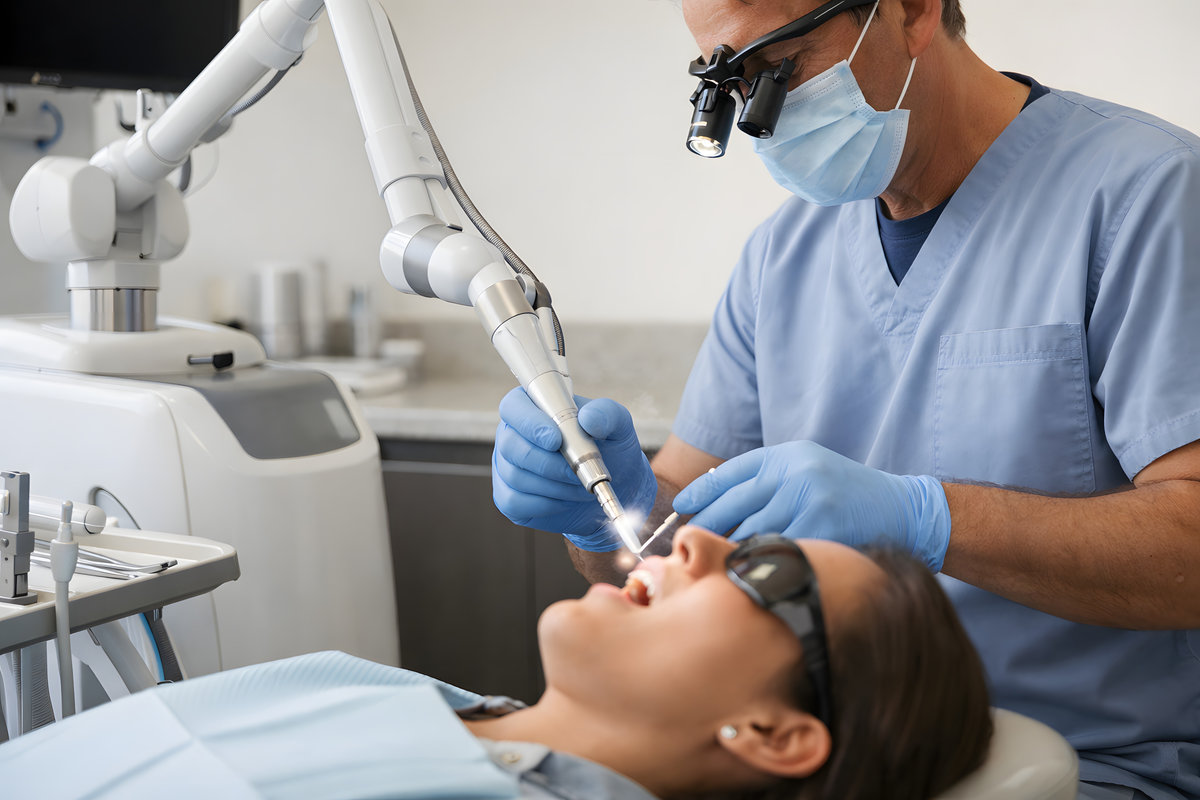
Root canal treatment has a reputation that doesn’t match the reality of modern endodontic care. For many patients, the fear isn’t the procedure itself but the anticipation of pain before, during, and after the appointment. That anxiety is understandable, but there’s a meaningful gap between what people expect and what they actually experience, especially when care includes laser-assisted treatment, which has changed how endodontists manage discomfort at every stage of the process.
At Burien Endodontics, Dr. Matthew Tomala combines careful clinical technique with advanced technology to make root canal therapy as comfortable as possible. Laser treatment is one of the tools Dr. Tomala uses to support disinfection, reduce post-operative discomfort, and promote healing, bringing a higher standard of care to patients throughout the Burien area.
How Lasers Work in Endodontic Treatment
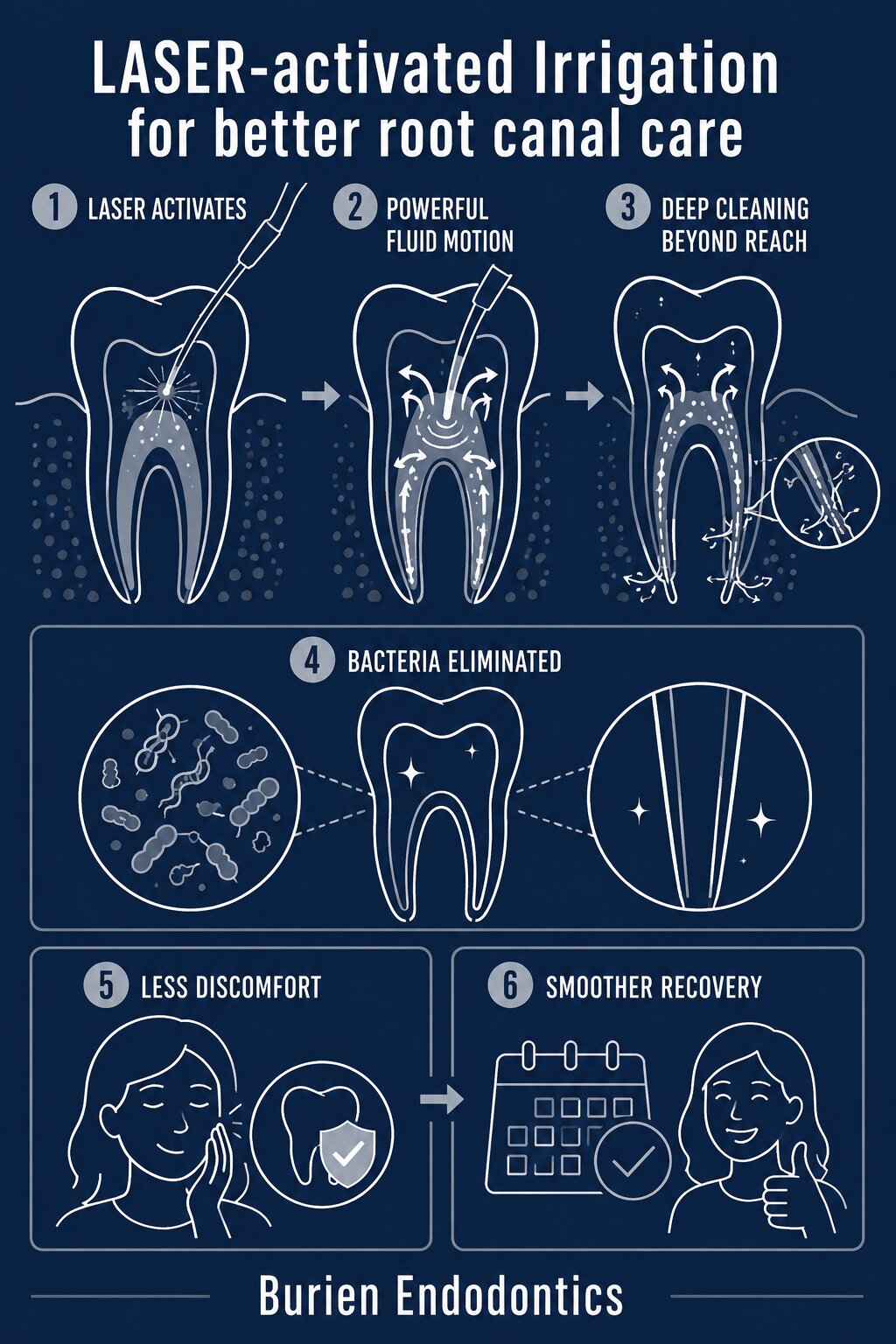 Lasers in endodontics aren’t a single tool with a single purpose. Two primary approaches matter most for patient comfort: laser-activated irrigation and low-level laser therapy (LLLT), sometimes called photobiomodulation.
Laser-Activated Irrigation
During a root canal, the interior of the tooth must be thoroughly cleaned and disinfected before it can be sealed. Laser-activated irrigation uses laser energy to create acoustic streaming effects within the irrigant solution, pushing it deeper into the canal system and into areas that conventional instruments cannot reliably reach. Bacteria that survive initial cleaning are a primary cause of post-treatment discomfort and treatment failure, which is why thorough disinfection at the time of the procedure translates directly to a smoother recovery.
This approach aligns with Dr. Tomala’s emphasis on care: clean canals are the foundation of successful endodontic outcomes. The technology in our office is selected with that goal in mind, and laser-assisted irrigation represents one of the most meaningful advances available to achieve it.
Low-Level Laser Therapy for Pain Relief
Low-level laser therapy works differently. Rather than disinfecting, it targets the tissue around the treated tooth to modulate the body’s inflammatory response. Research published in Complementary Therapies in Medicine found that most studies evaluating LLLT after endodontic treatment reported significantly reduced postoperative pain compared to patients who did not receive laser therapy. The effect is thought to work through the suppression of inflammatory mediators and modulation of nerve activity at the cellular level, reducing the intensity and duration of soreness following the procedure.
What This Means for Patients Seeking Pain Management
Patients who come to us for pain diagnosis and management often arrive with acute discomfort that has already been affecting their daily lives. The integration of laser treatment into care addresses pain at two distinct points: during the procedure, through more effective canal disinfection that reduces post-operative inflammation, and following the procedure, through LLLT’s direct effect on tissue recovery.
The benefits of laser treatment extend to healing as well. Laser therapy may accelerate tissue repair around the treated tooth, which is particularly valuable for patients managing their recovery around work and family schedules. Reduced swelling and a faster return to normal comfort are outcomes our patients may benefit from when laser support is incorporated into their care.
Lasers in Dental Trauma Cases
One area where laser technology offers a particularly important advantage is in the management of dental injuries. When a tooth sustains a traumatic injury, early laser intervention may help the affected pulp recover without the need for a root canal. Our approach to traumatic dental injuries includes a careful evaluation of pulp vitality. In select cases, early laser therapy may preserve the tooth’s natural nerve tissue and avoid the need for endodontic treatment entirely.
This kind of early-intervention thinking reflects a core principle in how we provide care: preserving natural teeth whenever possible, using every appropriate tool available. When laser therapy can support that goal, it becomes part of the treatment discussion.
During your first visit, Dr. Tomala conducts a localized exam, reviews your diagnostic images, and most often takes a CBCT scan to get a complete picture of the affected tooth and surrounding structures. From there, a discussion of treatment options, including laser support, is grounded in what the imaging actually shows. The full scope of endodontic services we provide includes:
- Non-surgical root canal therapy, with laser-assisted disinfection and post-treatment pain management
- Assessment and treatment of cracked teeth and resorption cases
- Retreatment of existing root canals showing pathology
- Apicoectomy and endodontic surgery when non-surgical treatment is not sufficient
- Direct and indirect pulp capping, including early intervention in trauma cases to avoid root canal treatment where possible
Each of these services can incorporate laser therapy, which can support better outcomes, whether that means improved disinfection, faster healing, or less postoperative discomfort.
Schedule Your Visit at Burien Endodontics
Dr. Matthew Tomala completed his postgraduate training in endodontics at the University of Washington, where he also earned his Master of Science in Dentistry, and continues to maintain a connection to the UW School of Endodontics as an affiliate assistant faculty member. His background, including an Advanced Education in General Dentistry residency with the U.S. Air Force and years of focused endodontic practice, informs an approach to care that is precise, thorough, and attentive to patients’ comfort throughout treatment. Our 100% digital patient records and in-office CBCT scanning mean that every treatment decision, including the role of laser therapy, is grounded in a complete clinical picture.
If you’re dealing with tooth pain, have recently had a dental injury, or have been told you may need a root canal, our team is ready to help you understand your options. Contact us today to schedule your visit.